
Bee-havior
Encountering a swarm of bees can be an unnerving experience. Bees are most often associated with the pain of being stung rather than with the environmentally beneficial impact generated by plant pollination and honey production. Many varieties of bee, especially the honey bee, are non-aggressive. If you see bees swarming, rather than being concerned, avoidance may be the best protocol.
When do bees swarm?
Contrary to what cartoons would have us believe, bees are not an army seeking enemies to attack. If you spot a swarm, it’s probably non-aggressive honey bees searching for a new home.
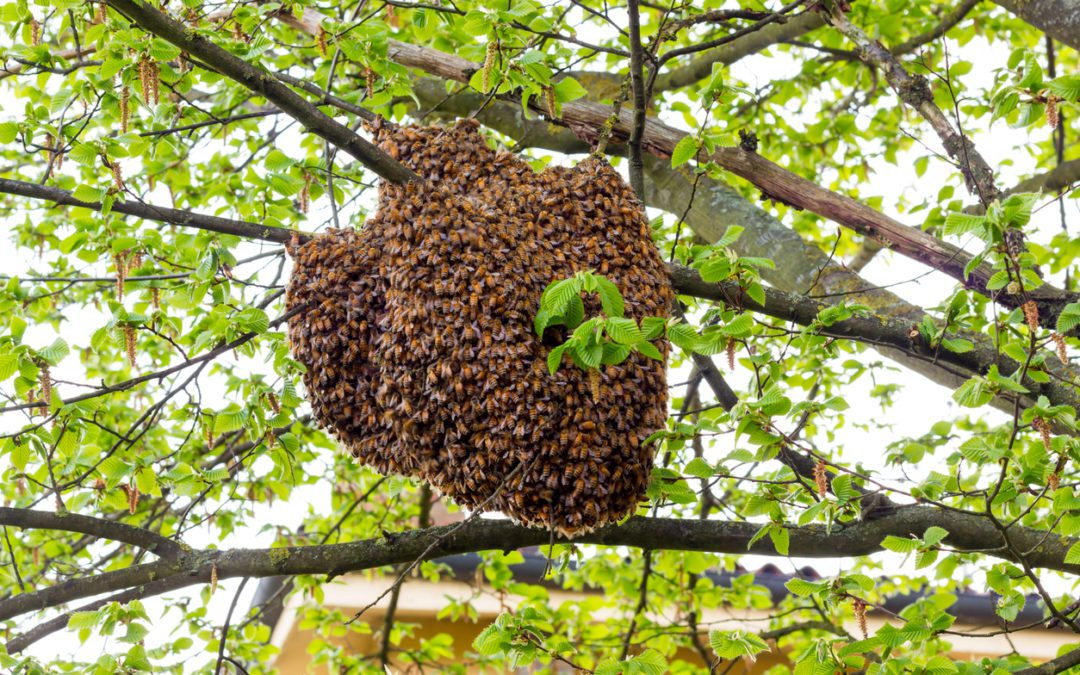
When hives become overpopulated or infected with disease, the queen will instigate the pursuit of a new safe place to lay her eggs. Because the queen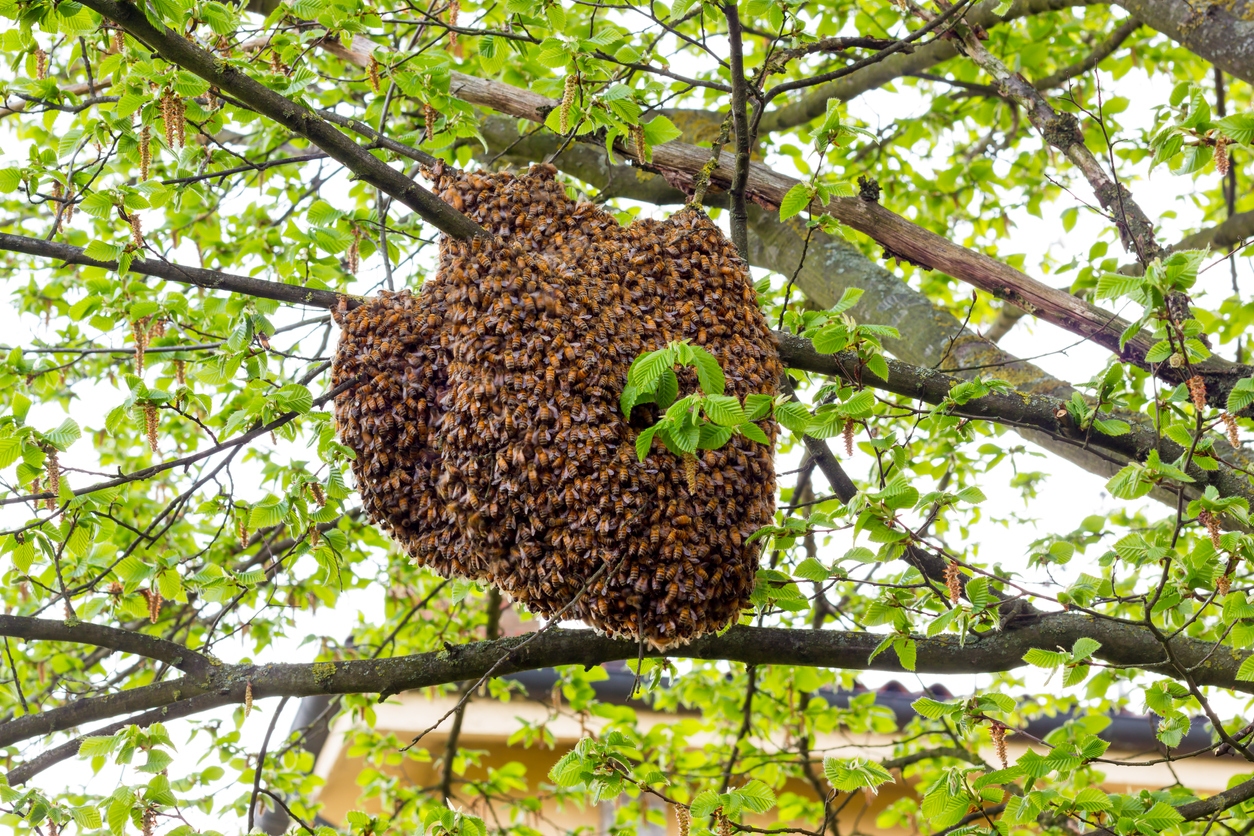 spends the majority of her time inside the hive, she is not skilled at flying and needs the protection of her worker bees while relocating. Throughout the process of transitioning to a new habitat, the queen may become fatigued and stop to rest, causing her colony to stop with her. If you see a large number of bees swarming or situated on a tree limb or protruding object, it is very likely a transitioning honey bee colony.
Coming across that many stinging insects in one place may seem alarming, but they will remain indifferent to your presence as long as there is no threat to the queen. This behavior becomes a problem only when the queen chooses your front porch or a tree near your front door for her new hive location.
Confronting a bee problem
Honey bee removal isn’t a task one should attempt alone. Because of the negative connotations associated with bees, many property owners try to exterminate a hive by setting it on fire or spraying insecticide. Not only is this extremely dangerous, it’s environmentally irresponsible. Bees play a vital role in our ecosystem, and eliminating them poses a threat to the environment.
If a hive is located where it won’t bother anyone, it is best left alone. If it’s too close for comfort, contact a professional insect control company. Responsible and humane bee control and removal companies will extract and relocate the nest in a safe and environmentally conscious manner. In the meantime, leave the bees be.